How to Build an Indoor Obstacle Course for Kids (With 15 Ideas)
Step-by-step guide to building indoor obstacle courses for kids using household items — perfect for burning energy on days stuck inside.
By The Slow Childhood
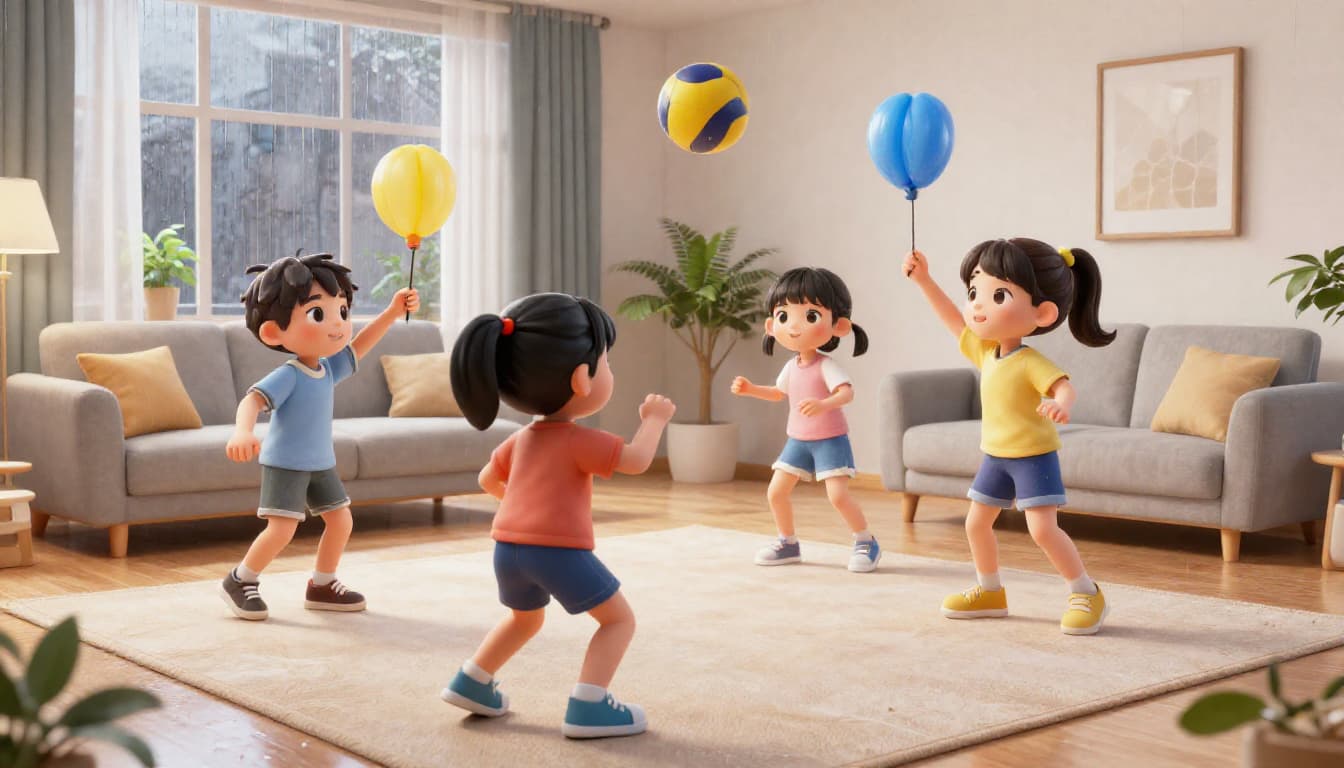
To build an indoor obstacle course for kids, arrange 5-8 stations using household items — pillows for stepping stones, chairs draped with blankets for tunnels, painter's tape on the floor for balance beams, couch cushions for jumping, and a table to crawl under. Connect the stations in a loop so children can repeat the course multiple times, and use a timer to add a challenge element for older kids. Indoor obstacle courses are one of the most effective ways to burn physical energy on rainy days, snow days, or any day when outdoor play is not an option. They develop gross motor skills, coordination, balance, body awareness, and sequencing — and children think they are just having fun.
Why Indoor Obstacle Courses Work So Well
Children need to move. Their bodies are designed for climbing, jumping, crawling, and balancing, and when they cannot do those things, the energy has to go somewhere — usually into behaviors that frustrate parents. An indoor obstacle course channels that physical need into a structured but playful format.
Occupational therapists frequently recommend obstacle courses for children who need extra proprioceptive input (the deep pressure sensory input that helps children understand where their body is in space) and vestibular input (the balance and movement input that comes from spinning, swinging, and changing positions). An obstacle course naturally provides both.
Beyond the physical benefits, obstacle courses build executive function skills. Children must remember the sequence of stations, plan their movements, adapt when something does not work, and regulate their bodies to move through tight spaces without knocking things over. These are the same cognitive skills that support reading, math, and classroom behavior.
Essential Planning Tips
Choose the Right Space
Clear a room of breakable items and sharp-cornered furniture. A living room, basement, or long hallway works best. You need enough space for children to move between stations without crashing into walls or each other.
Set Clear Boundaries
Before the first run, walk through the course together and demonstrate each station. Establish rules: one person per station, no pushing, wait your turn at bottleneck points. These rules prevent injuries and teach patience.
Build in a Circuit
Design the course as a loop that returns to the starting point. This allows children to repeat the course continuously without confusion, and it creates a natural flow that prevents traffic jams.
Start Simple, Add Complexity
Begin with 4-5 easy stations. Once children master the basics, add new stations, increase difficulty, or introduce a timer. Building complexity over time keeps the course fresh across multiple sessions.
Involve Kids in the Design
Children ages 4 and up can help design the course. Give them the materials and let them decide the layout. This adds a problem-solving dimension and increases their investment in the activity.
15 Indoor Obstacle Course Station Ideas
Station 1: Pillow Stepping Stones
Setup: Scatter 5-6 throw pillows across the floor, spaced about 18 inches apart. Children must step from pillow to pillow without touching the floor ("the floor is lava").
Skills developed: Balance, spatial awareness, leg strength.
Age modifications:
- Toddlers (18 months-2 years): Place pillows close together so stepping is easy. Hold their hand if needed.
- Preschoolers (3-5): Space pillows further apart. Require hopping on one foot between some pillows.
- School-age (6+): Assign point values to pillows by color. They must land on pillows in a specific sequence to maximize points.
Station 2: Chair Tunnel
Setup: Line up 3-4 dining chairs in a row with a blanket or sheet draped over the top to create a tunnel. Make it dark inside for extra adventure.
Skills developed: Crawling, upper body strength, body awareness, spatial planning.
Age modifications:
- Toddlers: Use just two chairs with a short tunnel. Place a flashlight or toy at the far end for motivation.
- Preschoolers: Make the tunnel longer and have them army crawl (belly on the ground).
- School-age: Add obstacles inside the tunnel — a stuffed animal to crawl over or a pool noodle to duck under.
Station 3: Tape Balance Beam
Setup: Put a straight line of painter's tape on the floor, about 6-8 feet long. Children walk along the line heel-to-toe without stepping off.
Skills developed: Balance, concentration, foot placement, core strength.
Age modifications:
- Toddlers: Make the line short (3 feet) and wide (two parallel tape lines 4 inches apart).
- Preschoolers: Create a curved or zigzag line. Have them walk with a beanbag on their head.
- School-age: Walk the line backward, with eyes closed, or while balancing a book on their head.
Station 4: Cushion Mountain
Setup: Stack couch cushions, sofa pillows, and folded blankets into a mound. Children climb up one side and slide or jump down the other.
Skills developed: Climbing strength, risk assessment, core stability, confidence.
Age modifications:
- Toddlers: Build a low mound (one cushion high). Spot them closely.
- Preschoolers: Build two to three cushions high. Let them figure out their own climbing route.
- School-age: Challenge them to climb without using their hands, or to carry a stuffed animal across the mountain without dropping it.
Station 5: Hula Hoop Jumps
Setup: Lay 3-4 hula hoops flat on the floor in a line or pattern. Children jump from hoop to hoop with both feet together.
Skills developed: Jumping, landing control, leg power, sequencing.
No hula hoops? Use towels folded into circles, tape circles on the floor, or paper plates.
Age modifications:
- Toddlers: Step into one hoop at a time. No jumping required.
- Preschoolers: Jump with two feet from hoop to hoop.
- School-age: Hop on one foot, or assign actions to each hoop — jump in the first, spin in the second, touch the ground in the third.
Station 6: Under the Table Crawl
Setup: Use a dining table or desk that children must crawl under to pass through. For extra challenge, hang streamers or strips of fabric from the table edges that they must navigate around.
Skills developed: Body awareness, spatial planning, problem-solving.
Age modifications:
- Toddlers: Leave the space under the table open and clear.
- Preschoolers: Add hanging streamers they must push through without pulling down.
- School-age: Add a "laser field" of yarn or string criss-crossed between the table legs that they must navigate without touching.
Station 7: Ball Toss Target
Setup: Place a laundry basket, bucket, or box 5-8 feet away. Give children 3-5 soft balls (rolled socks work perfectly) to toss into the target. They must make at least two baskets before moving to the next station.
Skills developed: Hand-eye coordination, throwing accuracy, arm strength.
Age modifications:
- Toddlers: Stand 2 feet from a large laundry basket. Drop the ball in rather than throwing.
- Preschoolers: Stand 4-5 feet away. Use a medium-sized target.
- School-age: Move the target further away, use a smaller container, or require an underhand versus overhand throw.
Station 8: Bear Walk Section
Setup: Mark a section of floor (about 8 feet) where children must walk on hands and feet with their bottoms in the air — like a bear. No knees touching the ground.
Skills developed: Upper body strength, coordination, core stability, bilateral coordination.
Variations: Crab walk (belly up, hands and feet), frog jumps (squat and leap), penguin walk (feet together, arms at sides), or inchworm walk (hands walk out to plank, then feet walk to hands).
Station 9: Blanket Roll
Setup: Spread a blanket on the floor. Children lie down on one edge and roll across the blanket like a log, wrapping themselves as they go. Then they unroll and continue to the next station.
Skills developed: Vestibular processing, core strength, body awareness, bilateral coordination.
Why it matters: Rolling provides vestibular input that helps children regulate their sensory systems. Many occupational therapists use rolling as a calming activity for children who are overstimulated.
Station 10: Sock Skating
Setup: Designate a section of hardwood or tile floor for sock skating. Children slide in their socks from one marked line to another. They can push off a wall for speed.
Skills developed: Balance, leg strength, proprioception, risk management.
Safety note: Ensure the floor is clean and dry. Remove any rugs that could bunch up. This station works only on smooth flooring.
Station 11: Balloon Tap Challenge
Setup: Give each child a balloon. They must tap the balloon in the air and keep it from touching the ground while moving from one marker to another. If the balloon touches the ground, they start over.
Skills developed: Hand-eye coordination, tracking, bilateral coordination, multi-tasking.
Age modifications:
- Toddlers: Tap the balloon while standing still. No walking required.
- Preschoolers: Walk from point A to point B while keeping the balloon up.
- School-age: Keep two balloons up at once, or use only their non-dominant hand.
Station 12: Spinning Station
Setup: Place a mat or soft rug on the floor. Children must spin in a circle five times, then walk in a straight line to the next station. The temporary dizziness makes the balance challenge much harder.
Skills developed: Vestibular processing, balance recovery, core stability.
Safety note: Some children are very sensitive to spinning and may feel nauseated. Start with just two spins and increase only if the child is comfortable.
Station 13: Puzzle Piece Retrieval
Setup: Scatter 5-6 large puzzle pieces (or flashcards, or colored paper) around one area. Children must collect all pieces and assemble the puzzle (or arrange the cards in order) before moving on.
Skills developed: Cognitive skills, memory, problem-solving, fine motor skills combined with gross motor movement.
Why it works: This station adds a mental challenge to a physical course, giving children a brief rest from movement while keeping them engaged.
Station 14: Pool Noodle Limbo
Setup: Have an adult or older child hold a pool noodle (or broomstick) horizontally. Children must lean backward and walk under it without touching it or falling. Lower the bar after each round.
Skills developed: Flexibility, back strength, body awareness, spatial judgment.
No helper available? Balance the pool noodle between two chairs at a fixed height.
Station 15: Finish Line Celebration
Setup: Mark a clear finish line with tape. Place a bell, tambourine, or pot lid to bang when crossing the finish line. This gives children a satisfying conclusion and a clear signal to start the next lap.
Why a finish line matters: The celebration element — ringing a bell, slapping a wall, jumping on a crash pad — gives children a dopamine boost that motivates them to run the course again.
Sample Course Layouts by Age
Toddler Course (18 months-2 years): 4 Stations
- Pillow stepping stones (3 pillows, close together)
- Short chair tunnel (2 chairs)
- Cushion mountain (1 cushion high)
- Ball drop into a basket
Keep the course short and run it together holding their hand the first few times. Expect them to skip stations and go out of order — that is fine.
Preschool Course (3-5 years): 6 Stations
- Tape balance beam (zigzag)
- Chair tunnel (4 chairs)
- Hula hoop jumps
- Bear walk section
- Ball toss target
- Finish line bell
Walk through the course once together, demonstrating each station. Then let them run independently. Introduce a timer after 3-4 runs when they know the sequence.
School-Age Course (6+ years): 8-10 Stations
- Tape balance beam (backward, book on head)
- Laser field table crawl
- Cushion mountain with stuffed animal carry
- Spinning station (5 spins, then walk straight)
- Bear walk to crab walk transition
- Balloon tap walk
- Pool noodle limbo
- Puzzle piece retrieval
- Hula hoop one-foot hops
- Finish line bell
For school-age children, the timer is essential. Let them run the course 3 times to establish a baseline time, then challenge them to beat it. Record personal bests. Add or remove stations weekly to keep the challenge fresh.
Making It Last
A single obstacle course setup can provide entertainment for an entire day if you build in variety.
Time trials: Use a stopwatch and record times. Children are inherently motivated to beat their own records.
Backward run: Once the course is mastered, run it in reverse order.
Eyes closed: Blindfold older children and have a sibling give verbal directions through the course. This builds communication skills and trust.
Design challenge: Give children a pile of household items and challenge them to redesign the course entirely. The planning and building phase is itself a valuable activity that develops spatial reasoning and creativity.
Partner course: Children complete the course in pairs, holding hands or carrying a ball between them. This requires cooperation and communication.
The beauty of an indoor obstacle course is that it costs nothing, uses items you already own, and transforms a living room from a screen-watching space into an active play environment. On days when going outside is not possible, an obstacle course gives children exactly what their bodies need — movement, challenge, and the satisfying physical tiredness that leads to good sleep. For more ideas to fill a stuck-inside day, see our list of screen-free activities for rainy days. And once the obstacle course energy is spent, building a blanket fort makes a perfect cool-down activity.
Frequently Asked Questions
- How do I build an indoor obstacle course for kids?
- Use household items to create stations: pillows for jumping, chairs with blankets for tunnels, tape lines for balance beams, cushions for stepping stones, hula hoops for jumping through, and a table to crawl under. Set up 5-8 stations in a circuit and time each run.
- What are the benefits of obstacle courses for children?
- Obstacle courses develop gross motor skills, balance, coordination, body awareness, problem-solving, and sequencing. They also burn physical energy, build confidence, and teach children to follow multi-step instructions — all while having fun.
- What age is appropriate for indoor obstacle courses?
- Toddlers as young as 18 months can do simple obstacle courses with 3-4 stations (crawl through a tunnel, walk over a pillow, roll a ball). Ages 3-5 can handle 5-6 stations. Ages 6+ enjoy timed challenges with 8-10 stations and increasing complexity.
Enjoying this article?
Get more ideas like this delivered to your inbox every week.