Best Homeschool Curriculum for Preschool (Ages 3-5)
The truth about preschool homeschool curriculum — what you actually need, what to skip, and our top picks for play-based, Montessori, and gentle academic approaches.
By The Slow Childhood
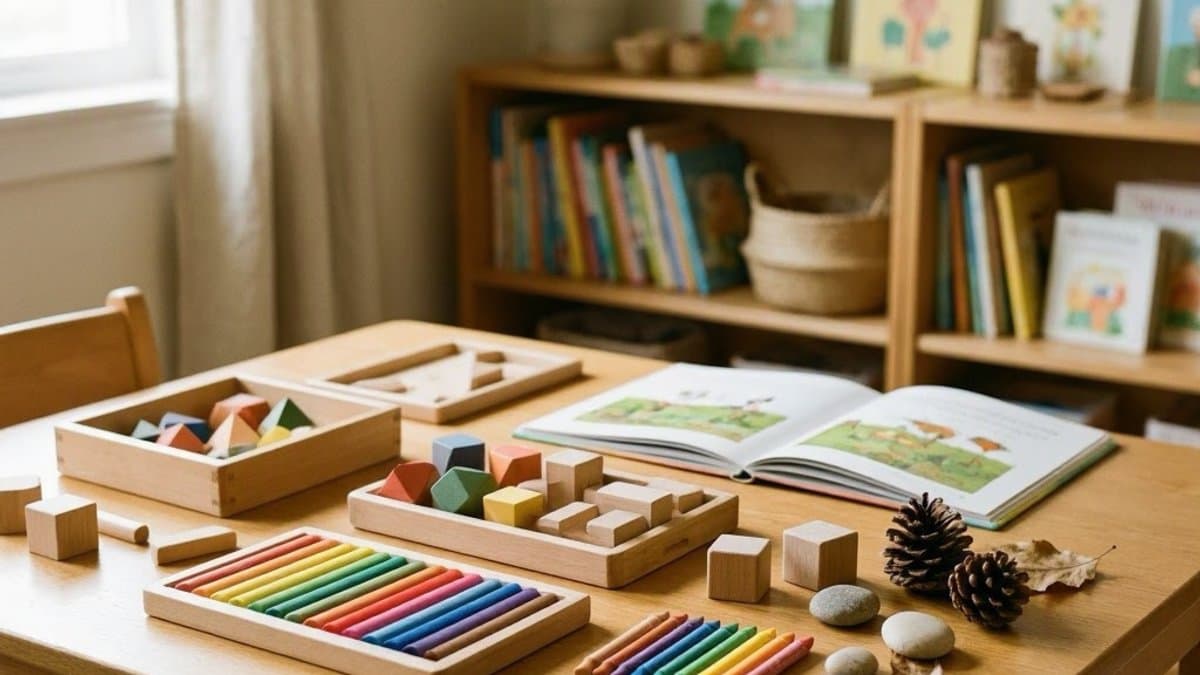
Preschool is the age when well-meaning parents are most likely to overthink things and accidentally strip the joy from learning. The kindergarten homeschool market is flooded with elaborate curricula, themed lesson plans, and subscription boxes promising to build school readiness through structured activities. Most of it is unnecessary, much of it is counterproductive, and some of it actively harms young children by replacing the play-based learning their brains actually need with premature academic drilling.
Here is the truth: children ages 3 to 5 do not need a curriculum in the traditional sense. They need rich experiences, loving adults who read to them and talk with them, open-ended materials to explore, plenty of outdoor time, and opportunities to play. Everything else — letter recognition, counting, pre-reading skills, science concepts, artistic expression — emerges naturally from those foundations.
That said, a loose framework can help parents stay consistent and ensure they are regularly offering rich experiences. This guide covers the approaches and resources that actually work for preschoolers, organized by philosophy so you can choose what fits your family.
What Matters Most in Preschool
Before any curriculum discussion, understand what preschool-aged children actually need:
Language exposure. The single most important predictor of later academic success is the richness of a child's language environment. Talk with your child throughout the day. Read aloud daily — picture books, poetry, early chapter books. Sing songs. Tell stories. Name things. Ask questions.
Play. Extensive, unstructured, self-directed play builds the executive function, social skills, creativity, and problem-solving that will support every area of learning later. Protect play fiercely and trust that it is real learning.
Outdoor time. Young children need hours outdoors daily for their physical, sensory, and emotional development. Nature play builds risk assessment, gross motor skills, focus, and emotional regulation in ways no indoor activity can replicate.
Hands-on experiences. Cooking, gardening, building, cleaning, caring for pets — these ordinary daily activities are the foundation of preschool learning. Children who participate in household life develop competence, responsibility, and countless practical skills.
Fine motor development. Activities that strengthen small muscles — playdough, scissors, drawing, threading, block building — are essential preparation for later writing. These should happen through play, not drills.
Phonemic awareness. Long before formal reading instruction, children should be playing with sounds — rhymes, songs, alliteration, silly word games. This auditory foundation makes formal phonics much easier later.
If your preschool experience includes these six elements daily, you are doing everything that matters. Everything below is just how to add structure or inspiration if you want it.
Best Play-Based Preschool Approach
A play-based approach trusts that children learn best through their own exploration with quality materials. No workbooks, no formal lessons — just thoughtfully prepared experiences and adults who engage thoughtfully.
Tinkergarten Outdoor Classes
Tinkergarten offers outdoor play-based classes and an at-home program with weekly nature activity guides. The focus is on outdoor exploration, hands-on sensory play, and social skills. It is not a traditional curriculum but a structured way to ensure you are outside and engaged with your child regularly.
Best for: Families who want guidance on outdoor play activities and connection with other local families.
The Playful Learning Approach
Books like The Read-Aloud Family by Sarah Mackenzie and Einstein Never Used Flash Cards make the case for play-based early childhood and provide concrete guidance for parents who want to trust the process.
Build your own preschool with:
- Daily read-aloud time (aim for 30-60 minutes split across the day)
- Free play with open-ended toys
- Daily outdoor time (minimum 1-2 hours, ideally much more)
- Simple art supplies always accessible (see our best art supplies guide)
- Cooking and household participation
- Nature walks and nature scavenger hunts
Cost: Near zero. You need books (library is fine), basic art supplies, and open-ended toys you likely already own.
Best Montessori Preschool at Home
Montessori is a proven approach for preschool-aged children, emphasizing independence, practical life skills, and carefully prepared learning materials. It translates beautifully to home with minimal investment.
The Montessori Toddler / The Montessori Child
The Montessori Toddler and The Montessori Child by Simone Davies are the best books to guide a home Montessori practice. They cover everything from setting up a Montessori-inspired home environment to practical life activities, sensorial work, language development, and math materials.
What you actually need:
Montessori at home does not require a roomful of expensive materials. Start with:
- A child-sized table and chair
- A low shelf with 6-10 activities displayed, rotated regularly
- Basic Montessori materials you can make or buy
- Real tools for practical life work: a small pitcher, a sponge, a dustpan, child-sized cleaning supplies
- Sensorial materials for sorting, matching, and comparing
Key Montessori Material Recommendations
For families who want to invest in some traditional Montessori materials:
- Sandpaper Letters — for tactile letter learning around age 3-4
- Number Rods — concrete introduction to numbers and quantity
- Color Tablets — for color discrimination and matching
- Knobbed Cylinders — for size grading and preparation for writing grip
- Moveable Alphabet — for early word-building when your child is ready
Best Budget Montessori: Our Montessori Guide
For a complete Montessori-at-home approach without premium materials, our own Montessori at Home Starter Guide ($9.99) covers the essential principles, daily rhythm, and DIY materials you can make with items you already own.
Best Gentle Academic Preschool Curriculum
For families who want some structure but still value play, a gentle academic approach provides light daily lessons alongside plenty of free time.
The Peaceful Preschool
The Peaceful Preschool is a gentle, literature-based preschool curriculum that uses one letter per week as an organizing theme, paired with read-alouds, simple activities, and hands-on learning. It is calm, beautiful, and does not overwhelm either parent or child.
Pros:
- Short daily activities (15-30 minutes of structured time)
- Literature-based with excellent book lists
- Gentle pace that honors childhood
- Seasonal and nature-rich content
- One letter per week is manageable and engaging
Cons:
- Requires acquiring the book lists from the library or purchasing
- Some activities require advance preparation
- Not a full-day program (which is a feature, not a bug)
Best for: Families who want a framework without overwhelming structure, and who value read-alouds and literature.
Blossom & Root Early Years
Blossom & Root is a nature-based, play-forward preschool curriculum that covers language arts, math readiness, nature study, art, and science through seasonal themes. It is secular, inclusive, and beautiful.
Pros:
- Nature-based approach with weekly outdoor exploration
- Seasonal rhythm that connects children to the natural world
- Includes art, music, and poetry alongside academics
- Gentle, age-appropriate pace
- Covers ages 3-5 comprehensively
Cons:
- Requires planning time to prepare materials
- Not a quick open-and-go curriculum
- Some families find it too loose; others find it too structured
Best for: Families drawn to nature-based, seasonal learning with a Charlotte Mason or Waldorf-inspired flavor.
The Good and the Beautiful Pre-K
The Good and the Beautiful Pre-K offers a more structured, workbook-included approach for families who want a complete open-and-go program. Pre-K covers letters, numbers, art, and early concepts through colorful workbook pages, activities, and read-alouds.
Pros:
- Complete open-and-go program — minimal planning required
- Beautiful design and illustrations
- Includes physical materials for hands-on activities
- Affordable compared to some other options
- Works well for families wanting more structure
Cons:
- More academic than play-based approaches
- Workbook-heavy for this age (some families consider this too formal)
- Religious content may not fit all families
Best for: Structure-loving families who want a complete kit ready to use.
Best Early Reading Resources
If your preschooler shows reading readiness — asking about letters, pretending to read books, trying to write their name — these are the gentlest ways to support early literacy.
For Phonemic Awareness
Before formal phonics, children need strong phonemic awareness (the ability to hear and manipulate individual sounds in words). This is built through:
- Rhyming books like Jamberry, Chicka Chicka Boom Boom, and the Llama Llama series
- Songs and nursery rhymes
- Sound games: "What words start with /b/? Ball, bat, banana..."
- Clapping syllables
For Early Phonics (When Ready)
When your child is genuinely interested in reading — not because you think they should be, but because they are asking — try:
- All About Reading Pre-Reading for gentle pre-reading activities
- Teach Your Child to Read in 100 Easy Lessons for families wanting a complete, scripted program
- Bob Books Set 1 — simple early readers for children who have learned basic phonics
Do not rush this. A child who is reading fluently at 4 has no long-term advantage over a child reading fluently at 7. Follow readiness, not a timeline.
Best Early Math Resources
Preschool math is best approached through play, games, and real-world counting — not worksheets.
Everyday Math Activities
Young children learn math through:
- Counting everything (stairs, grapes, toys, anything)
- Sorting by color, shape, size, or type
- Cooking and measuring
- Setting the table (one-to-one correspondence)
- Playing board games with dice and counting spaces
Quality Math Materials
When you want to add tangible math materials:
- Cuisenaire Rods — colored rods representing numbers, excellent for pattern and early math
- Numberblocks toys — based on the beloved children's TV show, these make numbers tactile and memorable
- Math Link Cubes — for counting, sorting, patterns, and early addition
- MathSeeds — an online early math program for families who want digital support
Building Your Preschool Day
A rich preschool day might look like this:
Morning (about 2-3 hours):
- Breakfast with conversation
- Outdoor play (1+ hour, ideally)
- One short focused activity (15-30 minutes): a Montessori activity, a phonics game, an art project, or a read-aloud
- Free play with rotated materials
Midday:
- Lunch together (prep food together when possible)
- Quiet time or nap
- Read-aloud session
Afternoon:
- Another outdoor session
- Hands-on activity: cooking, gardening, cleaning, building
- Art or creative play
Evening:
- Family dinner
- Bath, books, bed
Notice that "focused learning" is perhaps 30-45 minutes total. The rest is life, play, and exploration. That is exactly right for this age.
What to Skip
Elaborate themed curricula. A preschool that requires you to create letter-themed environments each week will exhaust you and does not add real value beyond a simple letter-per-week approach.
Subscription activity boxes for preschoolers. These create expectation that learning requires fancy materials rather than everyday life. Save the money for books and quality open-ended toys.
Flash cards. Flash cards have never been the best way for young children to learn anything. Skip them entirely.
Screen-based preschool apps. The research on educational apps for preschoolers is mixed at best. Your child will learn more from 30 minutes of reading together than from 30 minutes of any app.
Worksheet-heavy programs. If your preschool curriculum involves more than 10-15 minutes of worksheet-style work per day, it is probably too much for this age. Save the pencils-and-paper approach for kindergarten and beyond.
Preschool at home should feel abundant, relaxed, and joyful. If it feels pressured, rushed, or like work, something is off. Trust that reading aloud every day, protecting outdoor time fiercely, answering your child's questions patiently, and creating space for deep play is genuinely enough — because it is. Everything else is just nice-to-have.
When you are ready for the next step, see our guide to the best homeschool curriculum for kindergarten.
Frequently Asked Questions
- Do I need a preschool curriculum?
- Not in the traditional sense. Children ages 3-5 learn best through play, conversation, reading aloud, and hands-on exploration — not through structured curriculum. However, many families benefit from a loose framework that ensures they are regularly offering rich experiences. A preschool 'curriculum' at this age is better thought of as a collection of ideas, activities, and books rather than daily lesson plans.
- What should a 3-year-old learn?
- A 3-year-old should primarily be learning through play — building vocabulary, developing fine and gross motor skills, practicing social skills, and exploring the world through their senses. Academic skills like letter recognition, counting, and early math concepts will emerge naturally through daily activities, read-alouds, and simple games. Formal academic instruction at age 3 is unnecessary and often counterproductive.
- When should I start teaching reading?
- Follow your child's lead. Some children show reading readiness at 3 or 4, others at 6 or 7 — all are within the range of normal development. Early reading does not predict later academic success, and pushing reading before a child is developmentally ready can create frustration and aversion. Focus on reading aloud daily, building phonemic awareness through rhyming and sound games, and creating a language-rich environment. Formal phonics instruction can wait until your child is eager.
- How long should preschool homeschool take each day?
- Thirty minutes to one hour of 'focused' time is plenty for most preschoolers, broken into very short sessions of 5-15 minutes. The rest of the day should be play, outdoor time, read-alouds, helping with household tasks, and following the child's interests. The research is clear — young children learn more through play and rich experiences than through structured lessons.
Enjoying this article?
Get more ideas like this delivered to your inbox every week.