Best Science Curriculum for Elementary Homeschool (2026 Reviews)
A hands-on comparison of 6 elementary science curricula — from nature study programs to structured lab kits for homeschool families.
By The Slow Childhood
The best science curriculum for elementary homeschool depends on your family's approach, but for most families we recommend Real Science Odyssey for its balance of structured content and genuine hands-on experimentation. If you prefer a nature-centered, living books approach, the Charlotte Mason-style nature study is unmatched for building observation skills and a lasting love of science. Below, we review six excellent elementary science curricula to help you find the right fit for your home.
What Makes a Great Elementary Science Curriculum
Before we dig into individual programs, here is what we looked for when evaluating science curricula for the elementary years:
- Hands-on experiments — children at this age learn by doing, not by reading about doing
- Real scientific thinking — observation, questioning, hypothesis-testing, not just memorizing facts
- Accessible to non-science parents — clear teacher guides and background information
- Age-appropriate depth — enough substance to be meaningful without overwhelming young minds
- Flexibility — able to adapt to different schedules and family sizes
Elementary science should spark wonder and curiosity above all. The content specifics matter far less than the habits of mind a program cultivates — asking questions, looking closely, testing ideas, and recording observations. Even simple kitchen science experiments can build these habits before you commit to a full curriculum.
1. Real Science Odyssey (RSO)
Real Science Odyssey by Pandia Press is a secular, hands-on science program available for Life Science, Earth & Space Science, Chemistry, and Biology at two levels (ages 5-8 and ages 8-12).
Pros:
- Genuinely hands-on — experiments are central to every chapter, not optional add-ons
- Secular and evidence-based throughout
- Well-organized teacher guide with clear instructions and background information
- Lab notebook pages teach children to record observations like real scientists
- Materials for experiments are mostly household items
- Available as affordable digital downloads
Cons:
- Some experiments require advance planning and material gathering
- The layout and design is functional rather than visually stunning
- Less content coverage per year than textbook-heavy programs
- Limited assessment tools if you need formal grading
Best for: Ages 5-12. Families who want real scientific experimentation at home and prefer a secular homeschool approach. RSO is what elementary science should feel like — curious, messy, and exciting.
2. Building Foundations of Scientific Understanding (BFSU)
Written by Dr. Bernard Nebel, BFSU is not a traditional curriculum. It is a framework that teaches parents how to lead Socratic discussions and hands-on investigations across four major science domains: Nature of Matter, Life Science, Physical Science, and Earth & Space Science.
Pros:
- Develops genuine scientific reasoning and critical thinking
- The Socratic discussion method teaches children to think, not just absorb
- Extremely flexible — lessons can last 20 minutes or extend into full afternoons
- The interconnected lesson web shows how science topics relate to each other
- Builds conceptual understanding that persists long after facts are forgotten
- Very affordable for the depth of content provided
Cons:
- Requires significant parent preparation — you must read and internalize each lesson beforehand
- There are no student workbooks, worksheets, or pre-made assessments
- The teacher manual is dense and text-heavy
- Not a pick-up-and-go program — it demands parent engagement and confidence
- Can be intimidating for parents who feel uncertain about science
Best for: Ages 4-10. Ideal for parents who enjoy learning alongside their children and are comfortable leading discussions without a script. This is one of the deepest and most intellectually honest science programs available.
3. The Good and the Beautiful Science
The Good and the Beautiful Science offers unit studies organized by topic — botany, marine biology, human body, astronomy, and more. Each unit includes a beautifully designed course book with readings, experiments, and nature journaling.
Pros:
- Stunning visual design that children love engaging with
- Free PDF downloads for most units (printed books available at low cost)
- Each unit is self-contained and can be done in any order
- Includes nature journaling components that integrate with Charlotte Mason principles
- Experiments use simple, accessible materials
- Gentle enough for sensitive children
Cons:
- Contains occasional religious references (generally mild and skippable)
- Less rigorous than RSO or BFSU in terms of scientific methodology
- The unit study format means less systematic coverage of science disciplines
- Limited emphasis on experimental design and hypothesis testing
- More like enrichment science than a comprehensive program
Best for: Ages 5-10. Families who want beautiful, gentle science units they can enjoy together without stress. Works well as a supplement alongside nature study or a more structured program.
4. Apologia Elementary (Exploring Creation Series)
Apologia's elementary series by Jeannie Fulbright covers zoology, botany, astronomy, anatomy, and chemistry through a conversational, notebook-style approach. It is the most popular science curriculum among Christian homeschoolers.
Pros:
- Conversational, engaging writing style that reads aloud beautifully
- Notebooking approach develops writing and recording skills
- Thorough content coverage with real scientific depth
- Each book lasts a full school year
- Corresponding junior notebooking journals available for younger students
- Strong community support and supplemental resources available
Cons:
- Written from a young-earth creationist perspective — not secular
- The religious content is woven throughout, not easily separated
- Some experiments require materials that may need ordering in advance
- The full-year format offers less flexibility than unit-based programs
- Notebooking can feel tedious for children who dislike writing
Best for: Ages 6-12. Christian homeschool families who want comprehensive, well-written science with a faith-based worldview. The content itself is often excellent — the Zoology books in particular are favorites among many families.
5. Charlotte Mason Nature Study
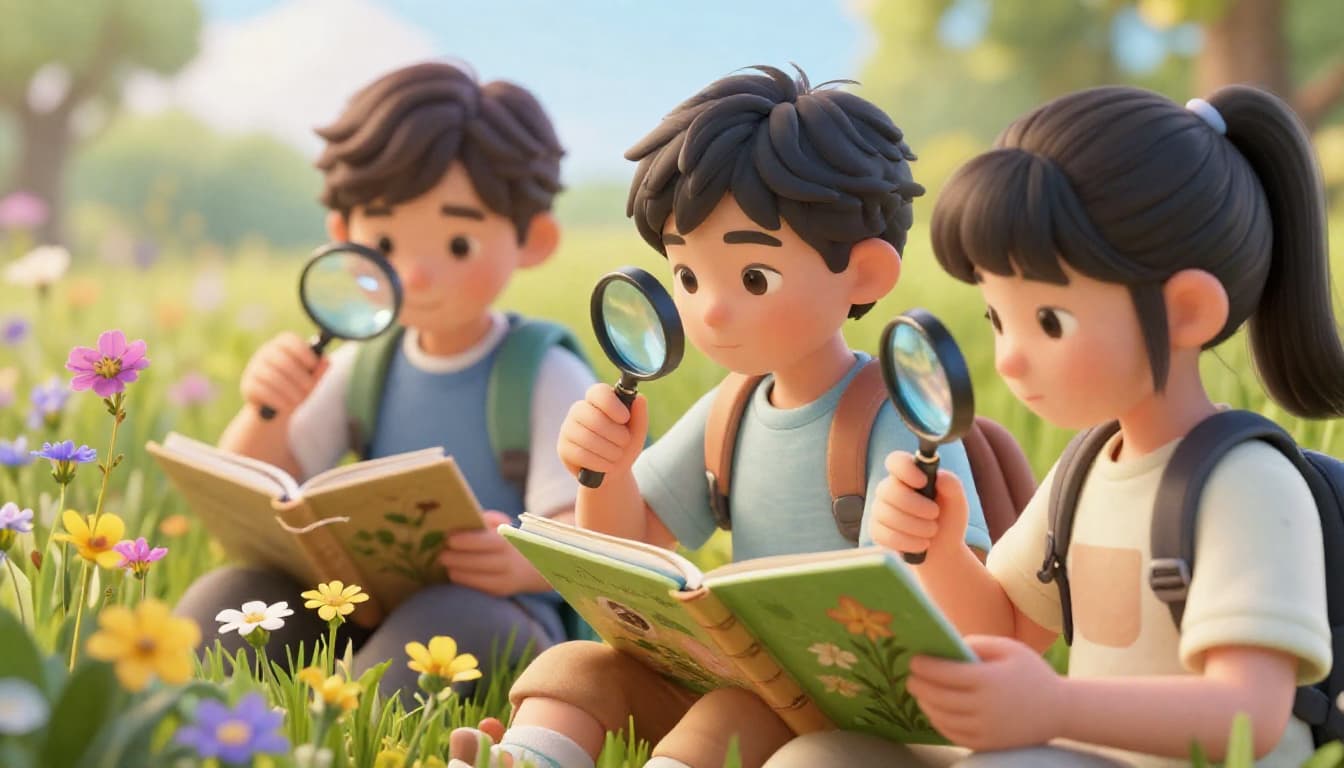
Nature study is not a single curriculum but an approach — one deeply rooted in the educational philosophy of Charlotte Mason. It centers on direct observation of the natural world, nature journals, field guides, and living books. Several resources support this approach, including the Handbook of Nature Study by Anna Botsford Comstock, Outdoor Hour Challenges, and NaturExplorers.
Pros:
- Free or nearly free — your backyard, a park, and a nature journal are all you need
- Develops extraordinary observation skills that transfer to all scientific disciplines
- Builds a genuine, lifelong connection to the natural world
- Completely flexible — adapts to any climate, season, or location
- Children learn at their own pace through authentic, self-directed discovery
- Integrates naturally with art, writing, and geography
Cons:
- Does not systematically cover physics, chemistry, or human biology
- Requires a parent who is willing to go outside regularly in all seasons
- Less structure can make it hard to track progress or feel confident about coverage
- May not satisfy state reporting requirements on its own
- Weather-dependent, which can be challenging in extreme climates
Best for: Ages 4-12 (and honestly, any age). This approach is ideal as the backbone of elementary science, supplemented with living books for topics nature study does not cover directly. If you are exploring a Charlotte Mason approach to homeschooling, nature study is non-negotiable.
6. NOEO Science
NOEO Science (from Logos Press) combines a reading list of living science books with corresponding experiment kits. Each level provides a schedule, a collection of curated books, and hands-on experiment materials.
Pros:
- Living books approach makes science come alive through story and narrative
- Experiment kits include most materials needed — less gathering for parents
- Scheduled lesson plans provide structure without rigidity
- Available in Physics, Chemistry, and Biology at multiple levels
- Secular content (despite the publisher's Christian orientation, NOEO itself is neutral)
- Combines the best of literature-based and hands-on learning
Cons:
- Expensive — the kits with books can run $150-$200 per level
- Some of the included books are better than others
- Less parent guidance than programs like RSO or Apologia
- The experiments are pre-selected — less flexibility to follow your child's interests
- Availability can be inconsistent — some kits go in and out of stock
Best for: Ages 5-12. Families who love the living books approach and want a pre-curated, low-planning science experience. NOEO removes the most time-consuming part of literature-based science — finding and scheduling the right books and experiments.
How to Choose: Matching Your Family's Style
For the hands-on, experiment-loving family:
Real Science Odyssey gives you the most genuine laboratory experience at the kitchen table. Every lesson revolves around doing science, not just reading about it.
For the deep-thinking, discussion-loving family:
BFSU builds scientific reasoning at a level most programs never reach. If you enjoy Socratic conversation with your children, this program will reward that investment.
For the nature-loving, outdoor family:
Charlotte Mason Nature Study turns your daily walks into the richest science education available. Supplement with living books for topics like chemistry and physics.
For the family that wants it beautiful and simple:
The Good and the Beautiful Science provides lovely unit studies that are low-stress and enjoyable. Add nature study and you have a complete, gentle science education.
For the family that wants everything packaged and ready:
NOEO Science delivers curated books and experiment kits to your door with a schedule already mapped out. Open the box and start learning.
Building a Complete Elementary Science Education
Many experienced homeschool families do not rely on a single program. Instead, they build a science education from several sources:
- A backbone approach — nature study or a structured curriculum like RSO
- Living books — well-written science books from the library that bring topics alive
- Documentaries and field trips — museums, nature centers, zoos, and quality science films
- Free exploration — time for children to dig in the dirt, build things, take things apart, and ask questions without any agenda
The magic of homeschool science is that real learning happens everywhere — at the creek behind your house, in the kitchen while baking bread, during a thunderstorm viewed from the porch. The curriculum is a guide, not a cage.
Our Top Recommendation
For most elementary homeschool families, we recommend Real Science Odyssey as your primary science curriculum, combined with regular nature study outdoors. This combination provides systematic content coverage through RSO's structured experiments and readings, while nature study develops the observation skills, wonder, and outdoor connection that no textbook can replace.
If your math curriculum and reading instruction already fill most of your morning, keep science simple. For families with younger children still exploring kindergarten curriculum options, nature study and informal experiments are more than enough. Two focused science sessions per week plus regular outdoor time will build a stronger scientific foundation than daily worksheets ever could.
Whatever you choose, remember the goal of elementary science: not to memorize the parts of a cell or the order of the planets, but to raise a child who looks at the world and asks, "Why does that happen?" That curiosity, once kindled, carries them through every level of science to come.
Frequently Asked Questions
- What is the best hands-on science curriculum for homeschool?
- Real Science Odyssey and Building Foundations of Scientific Understanding (BFSU) are the most hands-on elementary science curricula. Both emphasize experiments and discovery-based learning with minimal textbook work.
- Do I need a science degree to teach homeschool science?
- No. The best elementary science curricula are designed for parents without science backgrounds. Programs like The Good and the Beautiful Science and Real Science Odyssey include detailed teacher guides with scripted lessons and all necessary background information.
- How often should we do science in homeschool?
- For elementary students, 2-3 days per week is ideal, with at least one day dedicated to hands-on experiments or nature study. Many families do 30-45 minute lessons. Consistency matters more than frequency.
Enjoying this article?
Get more ideas like this delivered to your inbox every week.